PhD in Management
Program Overview
Our program is an ideal destination for anyone interested in a PhD in Business Administration with a Management focus, for four reasons:
Research Productivity
We are consistently ranked among the most productive departments in the field. In the Texas A&M/University of Georgia Rankings of management department productivity, we have ranked seventh over the last five years. When adjusted for faculty size, we are the second most productive department over the last five years. This makes us one of the most productive groups in the field.
Institutional Prestige
University of Georgia is No. 20 among public universities in the latest U.S. News & World Report rankings; ninth best U.S. public undergraduate business program (19th overall, U.S. News & World Report) and the 10th best U.S. public Full-Time MBA program (25th overall, U.S. News & World Report).
Student Focus
Not only are we productive, we publish with our students as well. If you look at our vitas, you’ll see that almost all of our work is being done with our PhD students. This accelerates their training and positions them favorably when they enter the academic job market.
Editorial Experience
Our faculty includes nine current or former associate editors at premier management journals including current associate editors of Academy of Management Journal, Strategic Management Journal, Journal of Applied Psychology, OBHDP, and the Journal of Management, and recent associate editors at the Academy of Management Journal and Academy of Management Review. This experience provides unique insights into the publishing process and helps position our students for success.
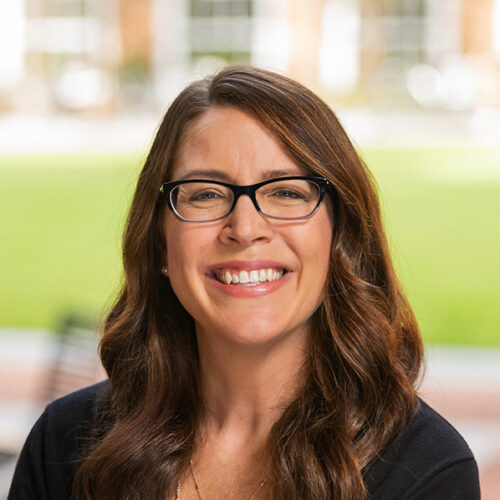
- William Harry Willson Distinguished Chair and Professor, Department of Management
- Director of Graduate Studies, PhD Program
Preferred deadline: December 31
Concentrations
Strategy & Entrepreneurship
Strategy & Entrepreneurship research explores sources of competitive advantage and firm success – both for large publicly traded companies and newly formed ventures. This research builds on work in sociology, social psychology, and economics.
Strategy & Entrepreneurship students work with:
- Radina Blagoeva
- Susan Cohen
- Daniel Gamache
- Scott D. Graffin
- Seung-Hwan Jeong
- Jeff Lovelace
- Maurice J. Murphy
- Mike Pfarrer
Current Strategy & Entrepreneurship students:
Organizational Behavior
Organizational Behavior research focuses on understanding employee attitudes, emotions, and behaviors, in an effort to improve the work experience. This research draws largely from industrial, organizational, and social psychology.
Organizational Behavior students work with:
- Joanna Lin
- Laura M Little
- Yihao Liu
- Fadel Matta
- James Matusik
- Jessica Beth Rodell
- Gabriel Sala
- Mary Eve Speach
Current Organizational Behavior students:
PhD students work with faculty on all phases of the research process—from idea generation and study design to data analysis and writing. The culture is collegial and informal, with students viewed as colleagues and coauthors. Moreover, students are encouraged to work with multiple faculty members, not just their chosen advisor or dissertation chair.
Typical Program Sequence
| Year | Fall | Spring |
|---|---|---|
| Year 1 | MGMT 9410: Strategic Management I (Upper echelons & managerial cognition MGMT 9870: Organizational Behavior II (Job motivation and attitudes) MGMT 9010: Research Methods in Management | MGMT 9830: Organizational Behavior II (Job behaviors) MGMT 9420: Strategic Management II (Corporate governance & evaluation of the firm) MGMT 9630: Advanced Research Methods |
| Year 2 | MGMT 9510: Strategic Management III (Corporate strategy & competition) MGMT 9850: Organizational Behavior III (Job affect and cognition) MGMT 9610: Structural Equation Modeling (SEM) | MGMT 9860: Organizational Behavior III (Meso Topics) MGMT 9530: Strategic Management IV (Entrepreneurship, Innovation, and Technology) MGMT 9620: Econometrics for Strategic Management |
| Year 3 | Assuming the passing of comprehensive exams, acceptable departmental evaluations, and the approval of the Associate Dean, PhD students are put on a five-year track. Year 3 is then focused on continuing to make progress on existing research projects while beginning lead-authored work. | |
| Year 4 | Year 4 is focused on existing research projects and the Dissertation Proposal. | |
| Year 5 | Year 5 is focused on interviews in the academic job market and completion of the final Dissertation Defense. | |
Placements
Our program has a consistent history of placing students at top universities:
- Florida (Justin Woodall, 2026, Organizational Behavior)
- Texas A&M (Charles Bennion, 2026, Organizational Behavior)
- Mississippi (Brady Shanklin, 2024, Organizational Behavior)
- Indiana (Farhan Iqbal, 2023, Strategy & Entrepreneurship)
- Indiana University–Purdue University Indianapolis (Emily Poulton, 2023, Organizational Behavior)
- University of Tulsa (Shubha Sharma, 2023, Organizational Behavior)
- Iowa State (“Elle” Hyunjung Yoon, 2022, Strategy & Entrepreneurship)
- New Hampshire and now Ohio State (Emma Frank, 2022, Organizational Behavior)
- Arizona State and now Arkansas (Rachel Burgess, 2021, Organizational Behavior)
- South Carolina (Edwyna Hill, 2021, Organizational Behavior)
- Pennsylvania State and now Texas A&M (Eric Lee, 2021, Strategy & Entrepreneurship)
- Texas A&M and now Arizona State (Tyler Sabey, 2020 Organizational Behavior)
- Nebraska (Rob Campbell, 2019 Strategy & Entrepreneurship)
- Pepperdine (Cole Short, 2019 Strategy & Entrepreneurship)
- Oregon and now Purdue (Kate Zipay, 2018 Organizational Behavior)
- Georgia State and now Virginia (Abbie Oliver, 2018 Strategy & Entrepreneurship)
- Notre Dame (Tim Hubbard, 2017 Strategy & Entrepreneurship)
- Indiana (Ryan Outlaw, 2016 Organizational Behavior)
- Illinois-Chicago (John Lynch, 2016 Organizational Behavior)
- Arizona State (Michael Baer, 2015 Organizational Behavior)
- Oklahoma State and now Clemson (Jason Kiley, 2015 Strategy & Entrepreneurship)
- Pennsylvania State and now Arizona State (Jonathan Bundy, 2014 Strategy & Entrepreneurship)
Our students received offers and/or campus visits from a number of schools, including:
- University of North Carolina
- University of Pennsylvania (Wharton)
- University of Virginia (Darden & McIntire)
- University of Washington
- Boston College
- Brigham Young University
- Indiana University
- University of Oregon
- University of Arizona
- Washington University in St. Louis
- London Business School
- Imperial College London